Baithak
7 Incredible Secrets of Jamdani Weaving One Motif at a Time


Unraveling the Slow Magic of Bengal’s Floating Threads
In the quiet handloom workshops of Phulia, West Bengal, every Jamdani motif is a story—not printed, not embroidered, but woven into existence one thread at a time. This ancient technique, born in Dhaka and reborn in Phulia, transforms fine cotton into poetry, using a process so intricate it borders on the sacred.
What Is Jamdani Weaving?
Jamdani—a term derived from Persian, meaning “flower vase”—refers to an exceptionally fine textile adorned with intricate motifs woven into the fabric itself. Recognized by UNESCO as an Intangible Cultural Heritage, Jamdani weaving blends artistic mastery with meditative slowness.
Unlike printed or jacquard textiles, Jamdani motifs are not automated. Each design element is inserted by hand, using the discontinuous supplementary weft technique, a process that demands precision, patience, and complete focus.
The Anatomy of a Motif: Weaving One Thread at a Time
The Supplementary Weft Technique
At the heart of Jamdani lies a unique process: motifs are inserted using extra weft threads, interlaced into the warp using a small bamboo needle or kandul. Each motif is drawn on graph paper and kept below the warp as a guide.
- The base fabric is woven in fine cotton or silk
- Two weavers often work together—ustad (master) and shagird (apprentice)
- The design appears to float on the surface of the fabric—light, airy, and unmistakably Jamdani
This method can take weeks to months for a single saree—especially for all-over designs (jaal).
The Looms of Phulia: Reviving a Legacy
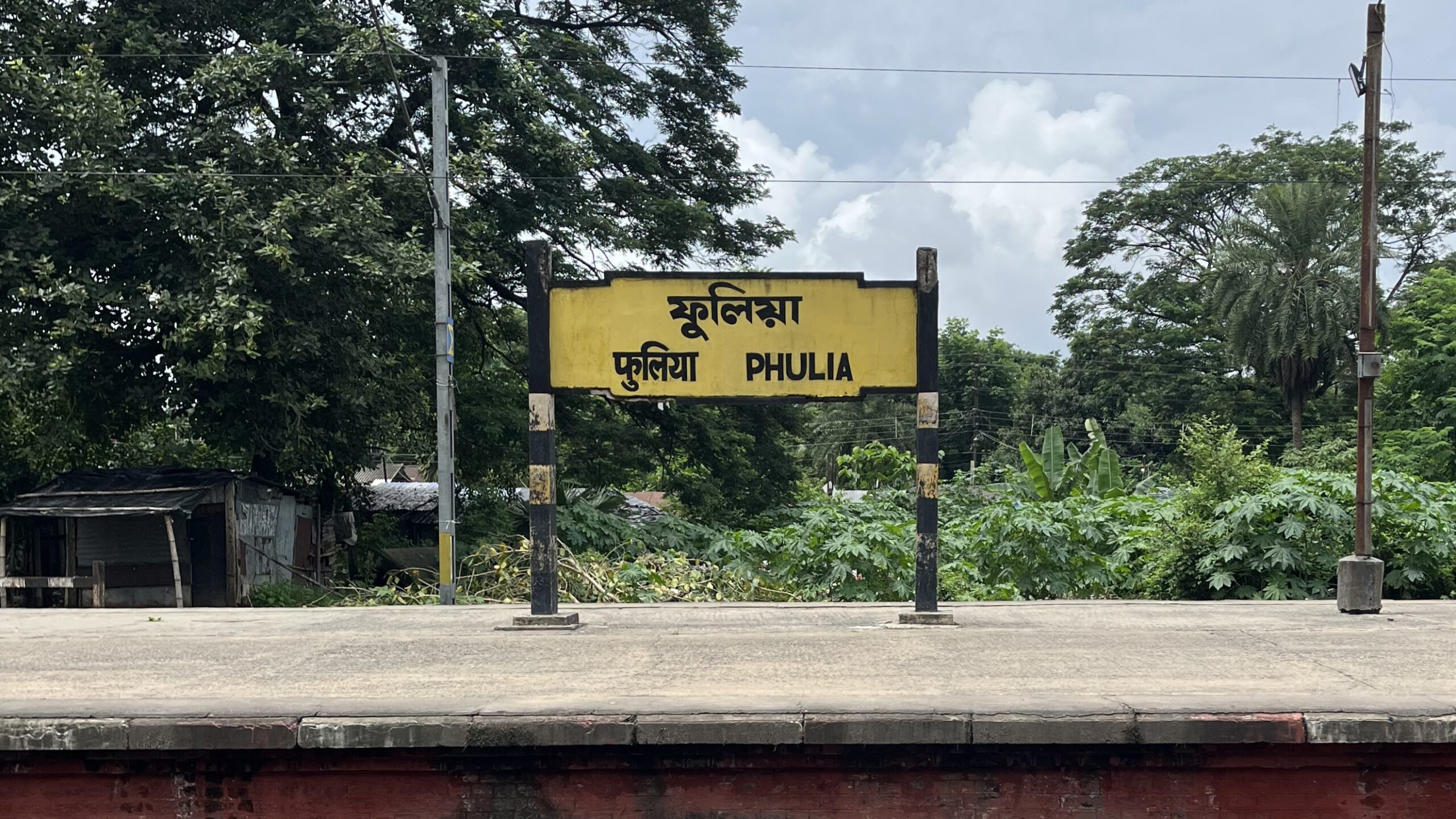
Phulia, located in West Bengal’s Nadia district, became a weaving hub post-Partition, when artisans from Dhaka and Tangail migrated to India. Here, they mixed their skills with local Shantipur traditions, developing what is now known as Phulia Tangail Jamdani.
Phulia continues to uphold:
- Traditional pit and frame looms
- Use of high-count cotton (up to 120s and beyond)
- Motifs passed down for generations
Discover our exquisite handloom collection from Phulia. Click Here
From Sketch to Saree: The Weaving Journey
- Yarn Preparation: Fine cotton or silk yarn is washed, dyed (often with azo-free or natural dyes), and starched using rice water to gain strength.
- Warping and Loom Setup: Threads are arranged in parallel for the warp. The weft bobbins are prepared for both the base and motif yarns.
- Motif Mapping: Designs are sketched on graph paper and inserted beneath the warp for reference.
- Motif Insertion Begins: Each motif thread is individually placed by hand using a fine tool or stick. No Jacquard, no shortcuts.
- Finishing Touches: The saree is cut from the loom, washed, sun-dried, and sometimes embellished with light zari work or tassels.
A Motif Speaks: Stories in Silk and Cotton
Common Jamdani motifs are not random decorations—they are cultural symbols:
| Motif Name | Meaning |
| Kalka (Paisley) | Fertility and life energy |
| Padma (Lotus) | Purity and spiritual growth |
| Panna Hajar | “Thousand emeralds” – auspicious abundance |
| Mayur (Peacock) | Love, beauty, and elegance |
| Hansh (Swan) | Wisdom and grace |
Each piece is a textile of memory—woven, not printed. Explore our curated collection of the Phulia Handloom sarees.
Why It Takes Weeks (or Even Months)
- A single motif can take 20–30 minutes to insert.
- A saree with 300 motifs can take up to 3 months.
- This pace is not a flaw—it’s the essence of Jamdani. The slow rhythm preserves:
- Design accuracy
- Artisan well-being
- Cultural intention behind every thread
Voices from the Loom
“When I weave a motif, I remember my mother teaching me how to place the thread without looking. It’s not just weaving—it’s remembering.” — Swapan Basak, Weaver from Phulia, 3rd generation artisan
Master weaver Biren Kumar Basak, a Padma Shri awardee, says:
“Jamdani is like composing music. Every line is different, but together it sings.”
Owning a Jamdani: More Than Fashion
To wear Jamdani is to carry:
- A legacy of resistance (against colonial industry)
- A symbol of Bengal’s soul
- A garment stitched with hours of invisible care
- Jamdani is not fast fashion. It is slow heritage.
Jamdani is not fast fashion. It is slow heritage.